
I'm a participant in the Amazon Services LLC Associates Program, an affiliate advertising program designed to provide a means for me to earn fees by linking to Amazon.com and affiliated sites.
If you’re stuck between RingConn 2 vs Oura 3, you’re basically choosing between a no-subscription, battery-beast wellness ring and a polished, data-rich sleep and recovery ring with a monthly membership.
If you want the fast answer on RingConn 2 vs Oura 3:
- Choose RingConn 2 if you want no subscription, 10–12 day battery life, a portable charging case, and sleep apnea risk monitoring with AHI estimates at a lower long-term cost.
- Choose Oura 3 if you care more about premium sleep and readiness scores, a highly polished app, and a huge ecosystem of integrations—even if that means paying $5.99/month for Oura Membership.
Why this matters: a smart ring is something you wear 24/7. It quietly shapes how you sleep, recover, and plan your training or work days. Pick the wrong one and you either bleed money on features you hardly use, or you miss out on the insights that would’ve actually helped you feel better.
RingConn 2 vs Oura 3 — Comparison Table
| RingConn 2 | Oura Ring Gen 3 |
|---|---|
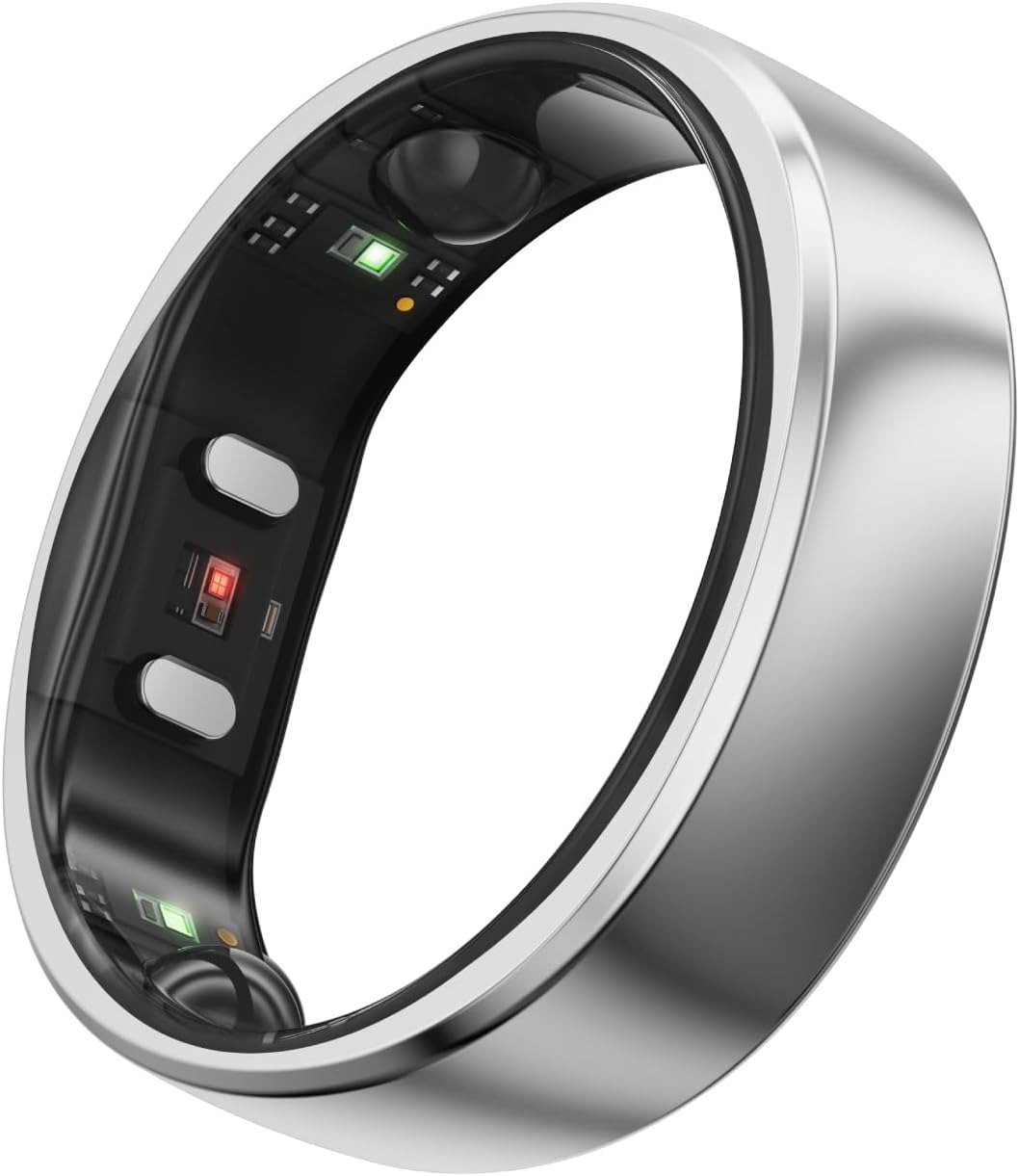 |  |
| Best for Long-Term Value & Apnea Awareness | Best for Sleep & Readiness Insights |
| Ultra-thin wellness ring | Sleek lifestyle / sleep tracker ring |
| Battery ~10–12 days | Battery ~4–7 days (often 3–5 in heavy use) |
| Portable charging case | Standard charging dock |
| Sleep apnea monitoring with AHI estimates | No apnea feature, but excellent sleep scoring |
| Sleep, HR, HRV, SpO₂, temp, stress, readiness | Sleep, HR, HRV, SpO₂, temp, activity, readiness |
| No subscription fees | Membership (~$5.99/month) needed for full value |
| More raw-data-style app | Very polished, guided app with strong integrations |
 | |
⭐ Quick Snapshot (Scores & Who Each Ring Is For)
RingConn 2 — Scorecard
- Overall: 9.0/10
- Design & Comfort: Very Good
- Health & Sleep Tracking: Very Good
- Battery & Charging: Excellent
- Long-Term Value: Excellent
Best for:
- People who hate subscriptions
- Travelers and busy folks who don’t want to charge often
- Anyone wanting sleep apnea monitoring and solid wellness tracking
- Budget-conscious buyers thinking in terms of total cost over 1–3 years
Core Facts (RingConn 2)
- Material: Ultra-thin smart ring (Gen 2, world’s thinnest according to RingConn)
- Battery: 10–12 days on a single charge
- Charging: Portable charging case, up to ~150 days of top-ups advertised
- Key Feature: Automatic sleep apnea risk monitoring with AHI estimates
- Focus: Sleep, stress, HR, HRV, SpO₂, temperature, recovery
- Subscription: None
Oura Ring Gen 3 — Scorecard
- Overall: 8.8/10
- Design & Comfort: Excellent
- Health & Sleep Tracking: Excellent
- Battery & Charging: Good
- Long-Term Value: Good (but membership adds up)
Best for:
- People obsessed with sleep and readiness scores
- Users who want rich insights and a polished app
- Those who love integrations (Apple Health, Google Fit, period tracking apps, etc.)
Core Facts (Oura 3)
- Styles: Heritage (plateau) & Horizon (smooth), sizes 6–13
- Sensors: ~15 advanced sensors for sleep, HR, HRV, temperature, SpO₂
- Battery: About 4–7 days depending on settings and SpO₂ usage
- Membership: First month free, then about $5.99/month or annual option
- Focus: Sleep, readiness, daily activity, stress, and long-term trends
How I Compared RingConn 2 vs Oura 3 (Methodology)
I pulled from:
- Official RingConn Gen 2 product pages and blog (battery life, apnea monitoring, no subscription, battery comparisons to other brands).
- Oura’s Gen 3 support docs, membership info, and product listings (sensors, styles, size range, membership price).
- Independent comparisons of RingConn vs Oura and “best smart ring” roundups.
- Long-term user takes on Gen 3 battery life and usage.
Instead of just repeating spec sheets, I focused on what matters day-to-day: charging habits, subscription cost over time, sleep data quality, and how it actually feels to live with each ring.
| RingConn 2 | Oura Ring Gen 3 |
|---|---|
| |
| Best for Long-Term Value & Apnea Awareness | Best for Sleep & Readiness Insights |
| Ultra-thin wellness ring | Sleek lifestyle / sleep tracker ring |
| Battery ~10–12 days | Battery ~4–7 days (often 3–5 in heavy use) |
| Portable charging case | Standard charging dock |
| Sleep apnea monitoring with AHI estimates | No apnea feature, but excellent sleep scoring |
| Sleep, HR, HRV, SpO₂, temp, stress, readiness | Sleep, HR, HRV, SpO₂, temp, activity, readiness |
| No subscription fees | Membership (~$5.99/month) needed for full value |
| More raw-data-style app | Very polished, guided app with strong integrations |
| |
RingConn 2 vs Oura 3: Design & Comfort
RingConn 2
RingConn Gen 2 leans hard into “invisible tech”: a very thin, lightweight ring designed to feel more like regular jewelry than a gadget.
- Meant to be worn 24/7 — sleep, shower, all day.
- Ultra-thin profile helps it slide under gloves or not catch on pockets.
- The charging case doubles as a safe place to toss it when you’re not wearing it.
Oura Ring Gen 3
Oura 3 has been the default “nice-looking” smart ring for years: sleek Horizon style, more angular Heritage style, multiple finishes, and a very refined look on the hand.
- Available in sizes 6–13 with two distinct design families.
- Low-profile enough that strangers often think it’s just a stylish ring.
- Very comfortable for all-day wear; many reviewers wear it for months with minimal irritation.
Design Verdict
- If you want a tiny, “feels-like-nothing” wellness ring plus a travel case → RingConn 2.
- If you care more about a jewelry-like look and picking between style families → Oura 3 still looks fantastic.
Oura 3 vs RingConn 2: Health, Sleep & Daily Insights
What Both Rings Do
Both RingConn 2 and Oura 3 track:
- Sleep duration and stages
- Heart rate and HRV
- Temperature trends
- SpO₂ (blood oxygen)
- Daily activity and basic calorie estimates
- Recovery / readiness-style insights
Independent tests typically find sleep results line up pretty closely between RingConn and Oura, with only small differences in stages or total time.
Where RingConn 2 Stands Out
RingConn positions Gen 2 as the first ultra-thin smart ring with sleep apnea monitoring. It uses higher-resolution sampling windows to estimate AHI and provide sleep apnea risk assessment, not just generic “poor sleep” labels.
- Automatic sleep apnea monitoring with AHI estimates (still not a replacement for a formal diagnosis, but a strong early-warning tool).
- Heavy emphasis on sleep health + stress visibility, showing how your nights impact your days.
- Full features are available without a subscription—no paywall around your own data.
For many people, this makes RingConn feel more like a wellness instrument than just a pretty gadget.
Where Oura 3 Stands Out
Oura 3 is still one of the most respected sleep and readiness trackers:
- Detailed Sleep, Readiness, and Activity scores that many users say line up with how they actually feel.
- Smart features like nap detection, long-term trend charts, and stress/strain insights.
- A mature app with rich visualizations, guided content, and integrations with 40+ apps (health platforms, cycle tracking, fitness apps).
The catch: most of the good stuff lives behind Oura Membership, so the monthly fee is part of what you’re really buying.
Features Verdict
- Want sleep apnea risk monitoring, solid wellness tracking, and no subscriptions? → RingConn 2.
- Want the most polished app experience, top-tier sleep/readiness scores, and lots of integrations? → Oura 3.
RingConn 2 or Oura 3: Battery Life, Charging & Long-Term Cost
RingConn 2
RingConn makes battery life a centerpiece:
- 10–12 days on a single charge.
- Charging case can provide around 150 days worth of recharges, so you barely think about plugging in.
- No subscription. Your cost is basically purchase price + electricity pennies.
Compared to other rings that last 4–7 days, RingConn’s runtime is noticeably more relaxing to live with.
Oura Ring Gen 3
Oura 3’s battery is good, but not amazing:
- Officially about 4–7 days depending on features.
- Real-world users often report closer to 3–5 days if they enable everything (like continuous SpO₂).
- Simple ring-on-dock charging; no portable case for Gen 3.
- Ongoing membership cost adds up over time; over a couple of years you can easily exceed the ring’s purchase price in subscription fees.
Cost & Battery Verdict
- Care about charging as little as possible and avoiding subscription creep? → RingConn 2 dominates here.
- Ok with charging more often and paying monthly to get Oura’s deep insights? → Oura 3 can still be worth it.
Oura 3 or RingConn 2: Pros & Cons
RingConn 2 — Pros
- 10–12 day battery life, far above the smart-ring average
- Portable charging case is perfect for travel and forgetful chargers
- Sleep apnea monitoring with AHI estimates and apnea risk assessment (great early-warning signal for sleep issues)
- No subscription fees — full features out of the box
- Comfortable ultra-thin design suitable for 24/7 wear
RingConn 2 — Cons
- App feels more “data heavy” and less polished than Oura’s experience
- Ecosystem and integrations are smaller than Oura’s
- Less focused on guided content or coaching; more on raw metrics and scores
Oura Ring Gen 3 — Pros
- Top-tier sleep and readiness tracking that many reviewers and users still swear by
- Mature, polished app with clear scores, trends, and helpful visuals
- Strong integrations with health, cycle, and fitness apps; part of a big ecosystem
- Stylish designs (Horizon and Heritage) with multiple finishes
Oura 3 — Cons
- Membership is basically required to unlock its full potential, adding a recurring cost
- Battery life is just okay (often 3–5 days with all features on)
- Gen 3 is now the previous generation, so it may feel slightly dated next to newer rings
Major Differences & Who Each Ring Is For
1. Sleep Apnea vs “Classic” Sleep Scores
- RingConn 2: Adds sleep apnea monitoring and AHI estimates—big deal if you snore, wake up tired, or suspect breathing issues at night.
- Oura 3: No apnea feature, but its sleep scoring and readiness system are still some of the best in wearables.
If apnea risk is on your radar, that’s a major point in RingConn’s favor.
2. Subscription vs No Subscription
- RingConn 2: Buy it once, you’re done. All features are included.
- Oura 3: The ring is just step one; Oura Membership is where most of the intelligence lives.
Over two or three years, RingConn can end up significantly cheaper overall.
3. Battery & Charging Experience
- RingConn 2: 10–12 days + charging case; you can almost forget it needs power.
- Oura 3: 4–7 days, usually 3–5 in heavy use, with a simple dock but no case.
If you travel, camp, or just hate managing chargers, RingConn feels way less needy.
4. Ecosystem & “Feel” of the App
- RingConn 2: More metrics-first, less “coach-y.” Great if you like graphs and numbers.
- Oura 3: Very story-driven experience—Sleep/Readiness scores, daily messages, and long-term trends that feel more like a coach than a spreadsheet.
Buy This If / Don’t Buy This If
RingConn 2
Buy RingConn 2 if:
- You want no membership fees, ever
- You care about sleep apnea risk and want AHI estimates to discuss with your doctor
- You value battery life and convenience over fancy app visuals
- You primarily want wellness and sleep tracking, not workout coaching
Skip RingConn 2 if:
- You want the biggest ecosystem and lots of app integrations
- You prefer a more curated, “guided” app experience instead of digging into data
Oura Ring Gen 3
Buy Oura 3 if:
- You want elite sleep and readiness tracking in a very polished app
- You’ll make use of integrations and long-term trend analysis
- You don’t mind a monthly fee for better insights
Skip Oura 3 if:
- Ongoing membership is a dealbreaker
- You’re sensitive to frequent charging
- You’d rather invest in the latest generation or a no-subscription alternative
Alternatives Worth Knowing About
- RingConn Gen 2 Air – Slightly cheaper, very light variant without apnea monitoring but with solid 10-day battery and no subscription; great if you like the RingConn philosophy but want to save a bit.
- Oura 4 – The newer, more comfortable all-titanium Oura with improved sensors and battery; if you’re leaning Oura anyway, you might compare Gen 3 prices vs 4 before buying.
- Other smart rings – Galaxy Ring, Ultrahuman, etc., each with their own spin on wellness, stress, or metabolic tracking.
FAQs
Is RingConn 2 as accurate as Oura 3 for sleep tracking?
Head-to-head tests generally show very similar sleep results between RingConn and Oura, with minor differences in sleep stages or total time. Both are considered strong for sleep tracking; RingConn just adds apnea risk assessment on top.
Does Oura 3 work without a membership?
You can use Oura 3 without membership, but most of the advanced insights, scores, and guidance are locked behind Oura Membership. Nearly every serious user ends up subscribing to get full value.
Which has better battery life, RingConn 2 or Oura 3?
RingConn 2 wins easily with 10–12 days plus a charging case. Oura 3 typically lands in the 4–7 day window, often less if you enable every feature.
Is Oura 3 too old now that Oura 4 exists?
Oura 3 still has strong sensors and a great app and is often sold at lower prices than Oura 4. But if you’re buying brand-new and plan to use it for years, it’s worth comparing Gen 3 deals vs just going straight to Gen 4.
Which is better if I suspect I have sleep apnea?
In this RingConn 2 vs Oura 3 matchup, RingConn 2 is clearly better: its sleep apnea monitoring and AHI estimates make it a strong companion to bring data to your healthcare provider for proper testing.
Other Interesting Articles
- What Size Weighted Vest Should I Get?
- Weighted Vest Workout: Build Strength, Burn Calories, and Boost Endurance
- Women’s Weighted Vest for Walking: Top Picks Tested by Fitness Experts
- Ladies Weighted Vest: Top Picks Tested by Fitness Pros
- Zelus vs Pacearth Weighted Vest — Which One Wins Your Next Workout?
- Zelus vs Apexup Weighted Vest — Which One Powers Your Next-Level Training?
- Zelus vs Prodigen Weighted Vest: Best Weighted Vest for Fat Loss
About the Author
Trimflo dives deep into smart wearables, fitness tech, and performance gear so you don’t have to. Every comparison is built on real specs, independent testing, and long-term ownership costs so you can confidently choose the tools that actually move the needle for your health and training.